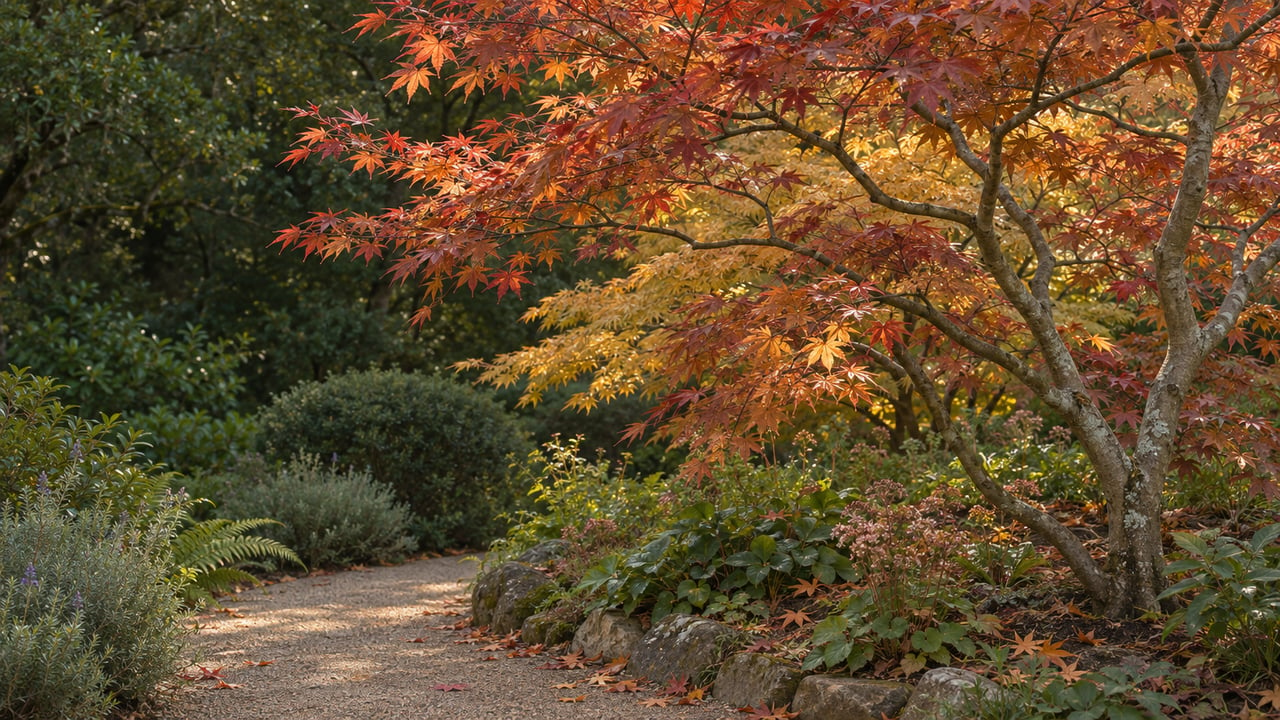
On Saturday, November 7, a photographer for The Press Democrat walked "The Secret Lives of Maples Walk" at Sonoma Botanical Garden. He photographed a Chinese five-lobed maple, considered critically endangered, with its leaves hanging in the afternoon light. The species is Acer pentaphyllum. According to the Sonoma Index-Tribune's November 9 report, it is one of the last trees on the property to show crimson, and it often carries the season into early December.
That late tree is why the garden at 12841 Highway 12 keeps its fall color longer than most places in Glen Ellen. The garden's maple collection doesn't change color all at once. It turns in a sequence, and the garden's calendar for this fall, called Maple Magic & Winter Wonder, follows that sequence from October to the longest night of the year. As of this week, the trees and the calendar are both halfway through.
The Order the Trees Keep
The garden was founded in 1987 and covers 67 acres. It includes an Asian woodland, a California native oak savanna and a Cabernet vineyard. About 50 maple species grow in the Asian woodland. In the garden's August 26 announcement, 87 percent of them are described as documented wild origin, and most are rarely grown commercially. So they aren't the cultivated Japanese maples sold in nurseries. They grew from seed collected in the wild, and each species changes color on its own timing.
The garden describes the sequence this way:
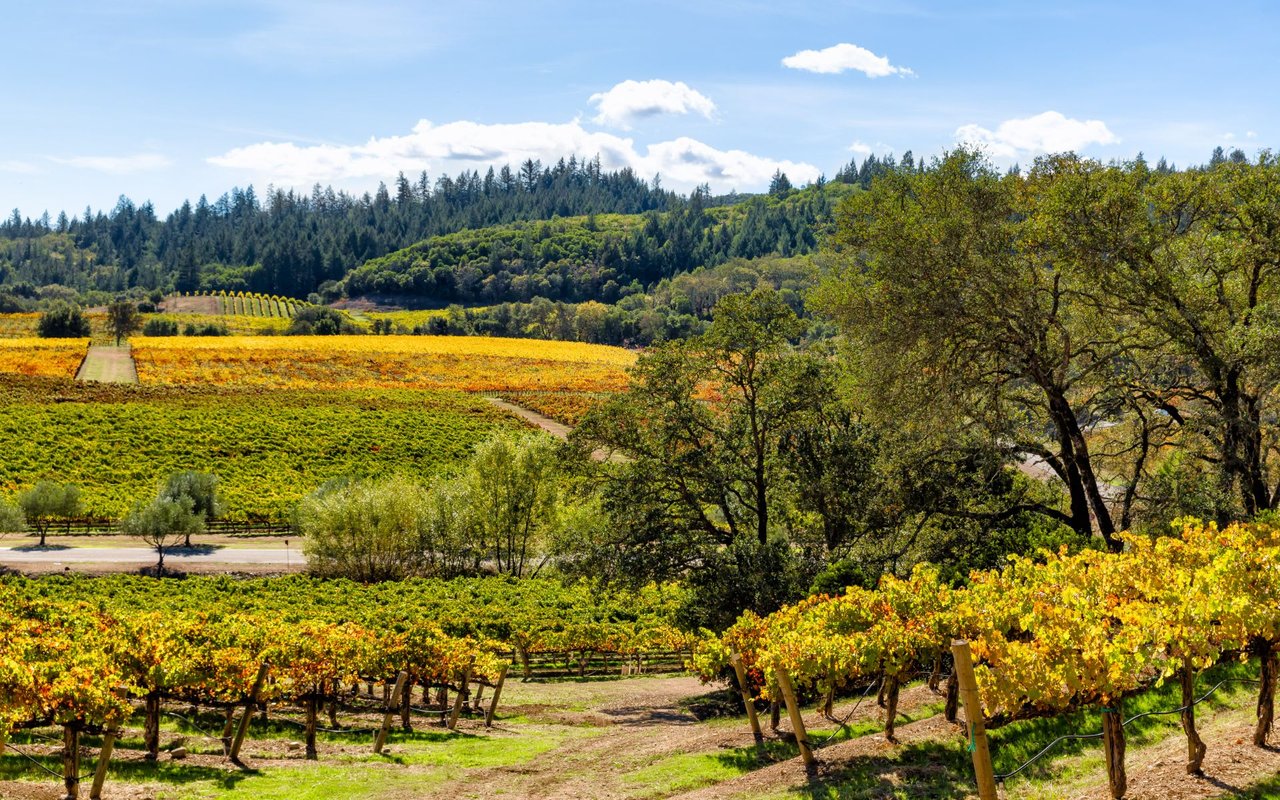
- Early fall. The katsura trees, Cercidiphyllum japonicum, turn apricot and lemon and give off a scent like cotton candy along the paths. Golden rose hips form on the chestnut rose, and fruit ripens on the garden's own Cabernet vines.
- November. This is peak maple color, in red, orange, yellow and in some species purple.
- Late fall into early winter. The five-lobed maple turns crimson and orange among the last. Purple berry clusters show on the beautyberry, Callicarpa japonica, against its large yellowing leaves.
The garden's published Maple Magic map shows where the collection is. The Index-Tribune's Sonoma Magazine piece connects the November visit to momijigari, the Japanese custom of going out to look at autumn leaves.
The Second Weekend of Guided Walks
The guided Maple Magic: Fall Color Walks are the center of the November program. The garden's late-summer announcement listed them for November 13 through 15 only. All three of those afternoon sessions sold out, and the program page now lists three more for this weekend.
- Friday, November 20, 10:30 a.m. to noon
- Saturday, November 21, 10:30 a.m. to noon
- Sunday, November 22, 10:30 a.m. to noon
Registration is required. The walk costs $10 for members and $20 for nonmembers, and the price includes garden admission. Check-in is at the Welcome Center. The walk is led by a garden guide and centers on the maple collection. These sessions start in the morning, while the first weekend's started at 1 p.m., so this weekend's light falls on the trees at a lower, cooler angle.
Visitors who would rather go without a guide can walk the grounds during regular hours, 10 a.m. to 5 p.m. The garden's Visit page lists holiday closures and early-closing days. As the maples further up the valley finish turning, the five-lobed maple gives a reason to come back after Thanksgiving.
December Uses What the Maples Leave Behind
Once most of the color has dropped, the December programs work with what is still on the trees and grounds. In its announcement, the garden says the late-season five-lobed maple and beautyberry inspired the wreath workshops. When the canopy is bare, bark is the easiest feature to see, and that is the focus of the bark tour. The lantern walks bring visitors in after dark, when the garden is normally closed.
- Saturday, December 5. Wreath Making Workshop. Two sessions, 10:30 a.m. to 12:30 p.m. and 2:30 to 4:30 p.m., led by Sonoma artist Robert Mahar. Participants use locally sourced evergreens plus botanical accents gathered on the garden grounds. The cost is $78 for members and $95 for nonmembers, admission included. No experience is needed.
- Saturday, December 5. Winter Bark Specialty Tour. From 1 to 2:30 p.m., between the two wreath sessions. The tour covers how bark protects a tree from insects, disease, fire and weather, and how to tell species apart by their bark. It costs $10 for members and $20 for nonmembers, admission included.
- Thursday through Sunday, December 10 to 13. Winter Wonder Lantern Walks. Evening sessions are listed from 5 to 6:30 p.m. Visitors carry lanterns along a route guided by staff and volunteers. The evening opens with hot cocoa, spiced cider and cookies. Tickets are $20 for members, $30 for nonmembers and $10 for ages 17 and under, and registration is required. The walks are a fundraiser for the garden's programs, collections and conservation work.
- Monday, December 21. Winter Solstice Sound Bath. From 5:30 to 6:30 p.m., indoors at the Center for Learning & Engagement. It is led by Glen Ellen practitioners Amelia Belle and Bob Rudorf with crystal singing bowls. Space is limited to 18 people, and tickets are $17 for members and $32 for nonmembers.
The garden says the lantern walk isn't a typical docent tour. It is meant as a quiet chance to walk the grounds after hours and in the dark. The garden's executive director put the goal of the whole season this way in the August announcement:
"As our rare Asian maples transform the Garden into a vibrant tapestry of autumn color, we invite visitors to celebrate the season through experiences that inspire wonder, creativity, and a deeper connection to nature." Jeannie Perales, Executive Director, Sonoma Botanical Garden, in the garden's August 26, 2026 release
The Index-Tribune's September 23 preview called October through December one season, built on the changing foliage and the programs that follow it. The December 21 sound bath is the last dated program on the calendar, scheduled for the longest night of the year.
Admission, Hours and Membership
The posted admission prices are $17 for adults, $14 for seniors 65 and older, and $8 for youth ages 5 to 17, teachers and active military. Children 4 and under get in free. The garden takes part in Museums for All, which offers $3 admission to qualifying visitors. Members get free admission and access to hundreds of gardens across the country, plus discounts at local nurseries.
Membership also lowers program prices. The fall color walk and the bark tour each cost members $10, half the $20 nonmember price, and lantern walk tickets are $20 for members and $30 for nonmembers. A household planning to attend several of these can compare those prices with membership on the garden's Visit page before buying tickets for each one.
Dogs aren't allowed on the grounds except for official service animals. The Lake Suttonfield walks east of the village are an option for an outing that includes a dog. The garden's phone number is 707-996-3166.
After the Leaves, the Bonsai
The garden's next exhibition opens soon after the solstice. The Bonsai Show: East Meets West! runs January 8 through March 28, 2027. The garden calls it an all-new show built around California native trees shaped as bonsai: coast redwood, Mendocino pygmy cypress, oak, and Sierra and California junipers. Close to twenty pieces will be on display. Some are small enough to hold in one hand, and the largest stand 40 inches tall. The artists come from the Redwood Empire Bonsai Society: George Haas and Diane Matzen of Petaluma, Ivan Lukrich and Michael Murtaugh of Santa Rosa, Alan Murakami of Sebastopol, and Bob Shimon of Point Arena. Society members will be at the garden Saturdays from 11 a.m. to 3 p.m. while the show is up.
The winter calendar includes ikebana and tataki zome workshops, a monthly Japanese tea ceremony, and guided hanami walks over Valentine's Day weekend, when the garden's magnolias are at their peak. As in fall, the winter programs are scheduled around when the plants are at their best.
For more on the village through the year, see our Glen Ellen neighborhood guide. If a change of season has you thinking about your own property in the valley, Caroline Sebastiani offers a private, no-obligation conversation about what your home is worth this winter, starting with a complimentary home valuation.