In February 2025, a native Napan named Paul Bresciani watched a signed offer on his family's valley homestead wobble over five acres of paperwork that hadn't even become law yet. The county was weighing a proposed one-acre limit on new home footprints inside the Agricultural Preserve, and the mere possibility of it was enough to spook a buyer mid-escrow. Bresciani's objection, submitted in writing to the Board of Supervisors, was blunt: someone spending more than five million dollars does not expect the county to dictate what they can build on a parcel of five, ten, or a hundred acres.
That standoff never fully resolved. What it revealed is still true today. On a Napa vineyard estate, the zoning file matters as much as the floor plan, and right now the file itself is in motion.
The Zoning Question That Isn't on the Listing Sheet
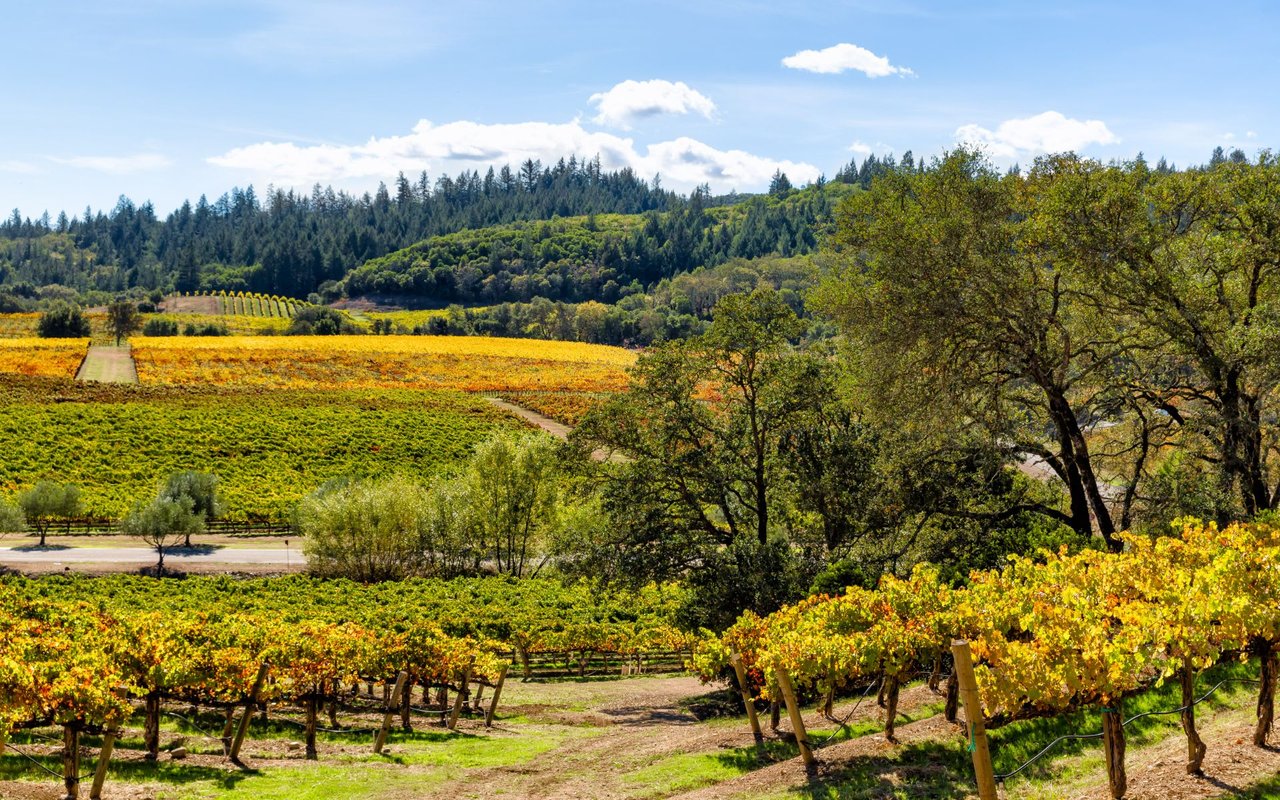
Napa County created its Agricultural Preserve in 1968 to keep the valley floor in vines rather than subdivisions, and the numbers explain why the rules have held for nearly sixty years. The county spans 504,450 acres total, but only about nine percent is currently planted in vineyard, and less than three percent of remaining land is even suitable for new planting, according to findings the Napa Valley Vintners trade group cites from the county's own Watershed Task Force. The Preserve itself covers roughly 31,600 acres of that scarce, plantable ground, stretching from the city of Napa north to Calistoga and out into Wooden Valley and Gordon Valley.
Inside that boundary, a parcel cannot be split into anything smaller than 40 acres. That single number does more to shape the buyer pool for Napa vineyard land than any list price. It is why a "vineyard estate" in Napa rarely behaves like a comparable-sized property anywhere else in Wine Country: the supply is not just limited, it is legally frozen at scale.
Here is what that zoning actually permits, in plain terms, before you get anywhere near a winery use permit:
| On an Ag Preserve parcel | Allowed | Requires discretionary review |
|---|---|---|
| Primary residence | Yes, any size | |
| Guest unit | Yes, one per parcel | |
| Accessory dwelling unit ("second unit") | Not allowed in AP zoning | Allowed under Agricultural Watershed (AW) zoning instead |
| Farmworker or caretaker housing | Yes, sized to the operation | |
| New winery on a parcel under 10 acres | No | |
| Converting land to non-agricultural use | Yes, triggers CEQA environmental review | |
| Winery visitor events beyond permit limits | Yes, county use permit modification |
That distinction between AP and AW zoning trips up more buyers than anything else in the file. A parcel that looks identical from the road, same acreage, same vine rows, same view corridor, can carry a completely different set of build rights depending on which of the two zones it sits in. Confirming that classification before writing an offer is not a formality. It determines whether the guest cottage you are picturing is a permitted guest unit or an ADU the county will not approve.
The Winery Definition Ordinance's Fine Print
If the parcel already has, or could support, a winery use permit, a second layer of rules kicks in under the county's Winery Definition Ordinance, adopted in 1990. The WDO set a 10-acre minimum parcel size for any new winery permit, up from as little as one acre under the prior rule. It also introduced what growers call the 75% rule: a new winery must source at least three-quarters of its grapes from within Napa County, a provision the Napa Valley Grapegrowers pushed specifically to keep winery growth tied to local farmland rather than imported bulk wine.
Winery coverage itself is capped at 15 acres or 25 percent of the parcel, whichever is smaller. And visitation is where the ordinance shows its age most clearly: any winery permitted after the WDO took effect can only host visitors by appointment. Wineries that predate the ordinance were grandfathered and can still take walk-ins. So two neighboring wineries on similar acreage can operate under entirely different visitation rules depending on when their permit was issued, a detail that shows up in due diligence, not in marketing photos.
The Rules Are Being Rewritten This Month
None of this is settled history. On August 15, 2026, the Board of Supervisors met to discuss a set of near-term zoning amendments requested in an April 10 letter from four of the county's largest agricultural groups: Napa Valley Vintners, the Napa County Farm Bureau, Napa Valley Grapegrowers, and Winegrowers of Napa County. The coalition framed the request around preserving an industry they estimate contributes more than $11.7 billion a year to the county, and the proposals on the table include doubling the production and visitation limits under the county's micro-winery ordinance and extending a pilot program under Assembly Bill 720 to allow estate tasting events on vineyard land that sits on winery-owned parcels, not just standalone vineyards.
That AB 720 pilot itself only began on January 1, 2026, and runs for 18 months, currently permitting a limited number of tasting events at vineyard sites separate from a winery's bonded production facility. Whether it gets extended to winery properties, and how far, is still being argued out loud in public meetings.
The more contentious thread is whether to touch the Winery Definition Ordinance directly. Supervisor Liz Alessio argued that today's visitors want more than a tasting counter and that the county's rules risk causing real economic fallout if they don't flex. Deborah Dommen, speaking for Treasury Wine Estates, made the case for culinary pairings and chef collaborations as the kind of experience modern wine consumers expect. Board Chair Amber Manfree pushed back on where that logic ends, warning the county would be on a
"slippery slope if we decide that yoga is agriculture"
and asking whether weddings would be next in line if the definition of agriculture kept stretching to cover whatever visitors wanted that year.
That exchange is worth reading as a buyer, not just as a spectator. If you are evaluating a property for its event or hospitality potential, the ceiling on what you'll be allowed to do is being negotiated in real time, and it could move in either direction before your escrow closes.
The Quieter Risk: Appeals
The same August meeting surfaced a number that rarely makes it into a listing packet: from May 2023 to May 2026, 12 percent of the county's discretionary land use approvals were appealed, 15 cases total, and those appeals consumed roughly 2,173 staff hours and $402,000 in county resources to resolve. That is the practical cost of contesting a permit decision in Napa, and it is a cost that lands on timelines as much as budgets. Any buyer counting on a permit modification, whether it's a winery expansion, an event permit, or a change of use, should treat the appeals process as a real variable in their closing calendar, not a footnote.
What This Means Before You Write an Offer
The county market backdrop makes the zoning question sharper, not softer. Napa County's median sale price over the three months ending in April 2026 was $852,000, down 8.4 percent year over year, with homes taking roughly 70 days to sell on average, nearly double the 39 days recorded the year before. That figure blends everything from in-town condos to hillside acreage, which is exactly the point: a blended county median tells you almost nothing about what an ag-zoned parcel with an active winery permit is worth. On land like that, the permit history is the asset. The house is the amenity.
Before an offer goes in on any Napa vineyard property, work through this sequence:
- Confirm whether the parcel is zoned AP or AW. That single distinction determines whether a second dwelling unit is achievable at all.
- Pull the winery use permit history if one exists. Note the issue date relative to 1990, since that determines whether visitation is appointment-only or grandfathered for walk-ins.
- Verify current coverage against the 15-acre or 25-percent cap, and confirm whether the property has room left to expand under existing entitlements.
- Check whether any pending permit modification on the property, or a neighboring one, is currently in the county's appeals queue.
- Ask directly whether the seller or their winery has applied for or benefited from the AB 720 pilot program, since that status may not survive the pilot's expiration or extension terms.
None of this shows up on a comparable sales sheet. It shows up in the county's planning file, and it is the difference between a vineyard estate that delivers what a buyer expects and one that quietly can't.
A Short FAQ
Can I add a guest house to a Napa vineyard property I'm considering? If the parcel is zoned AP, you're generally limited to one primary residence and one guest unit, with no separate ADU. If it's zoned AW instead, a second unit may be permitted. Confirm the zoning designation before assuming either outcome.
Does an existing tasting room permit transfer automatically to a new owner? Many winery use permits run with the land, but some carry operator-specific conditions. Always request written confirmation of transferability and any notice requirements from the county before closing.
Is the one-acre home footprint proposal from 2025 still something I need to worry about? As of the last public discussion the concept was kept alive for further community input rather than adopted or dropped, so it remains worth asking about directly if you're evaluating new construction on a large ag-zoned parcel.
Zoning history like this rarely shows up in a walkthrough, but it shapes what a Napa vineyard estate is actually worth and what it can become. If you're weighing a purchase or a sale in this market, Caroline Sebastiani can walk you through the permit file before you're standing in escrow wondering about it. Get a Free Home Valuation to start that conversation with the entitlement picture already in hand.