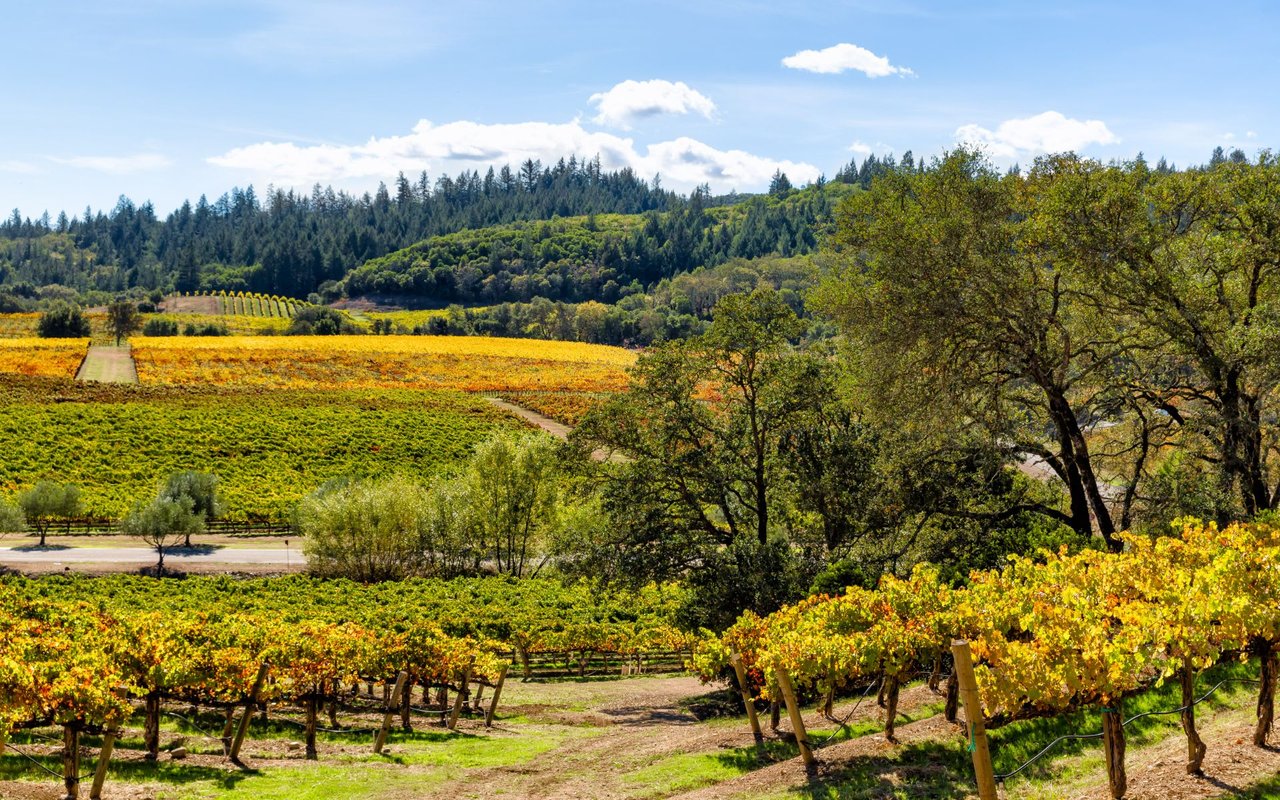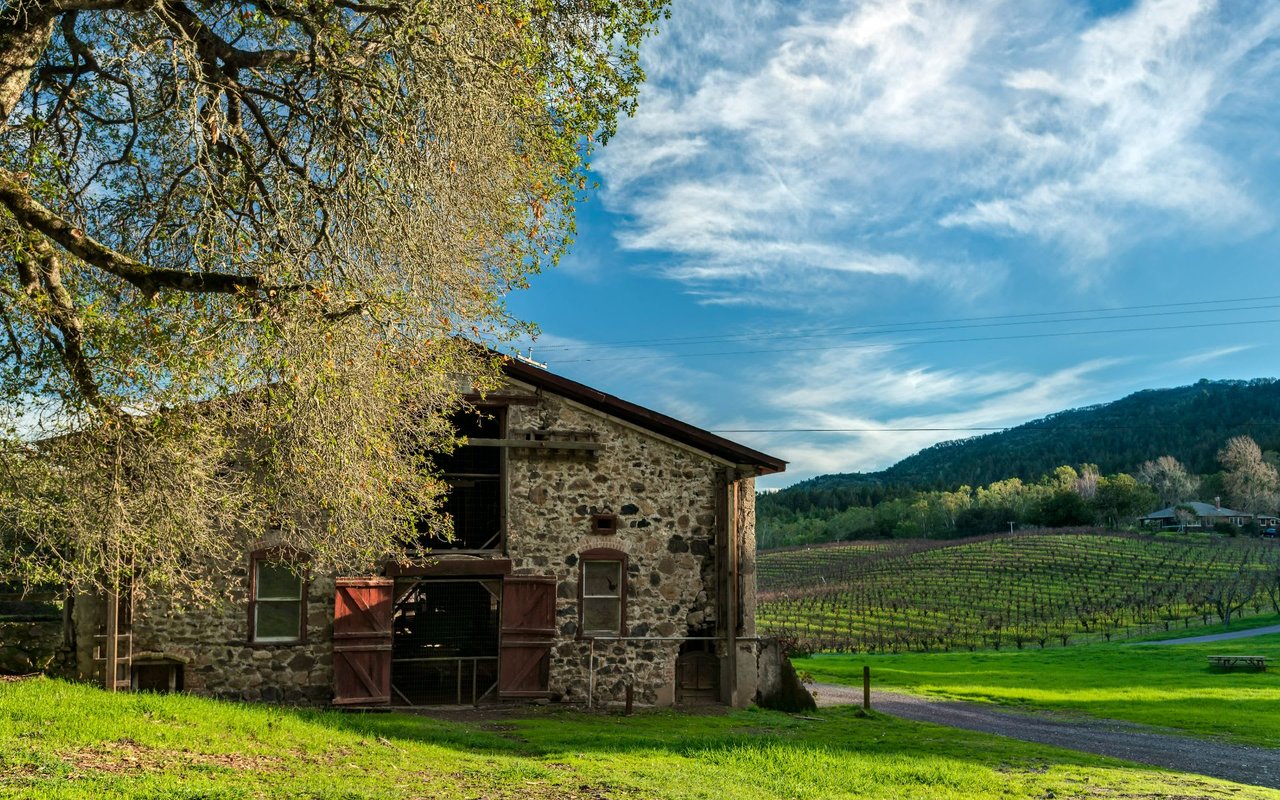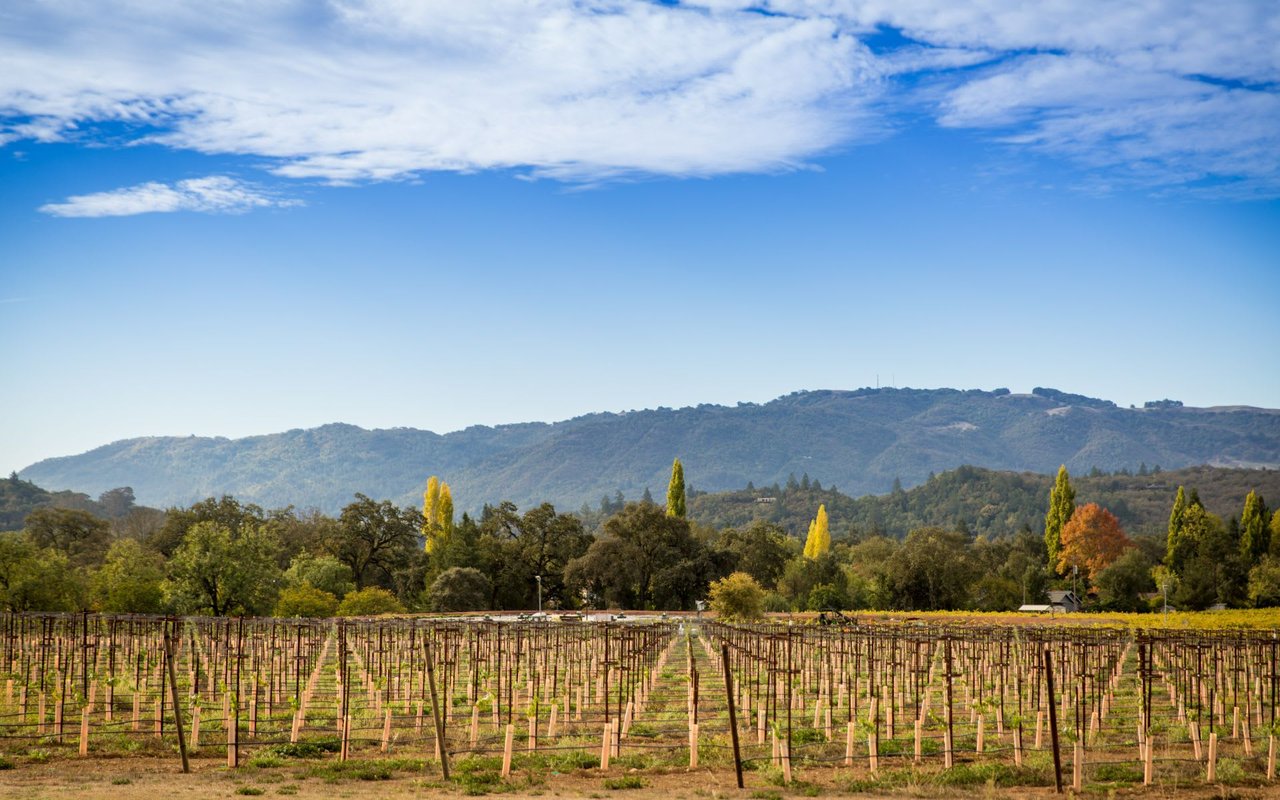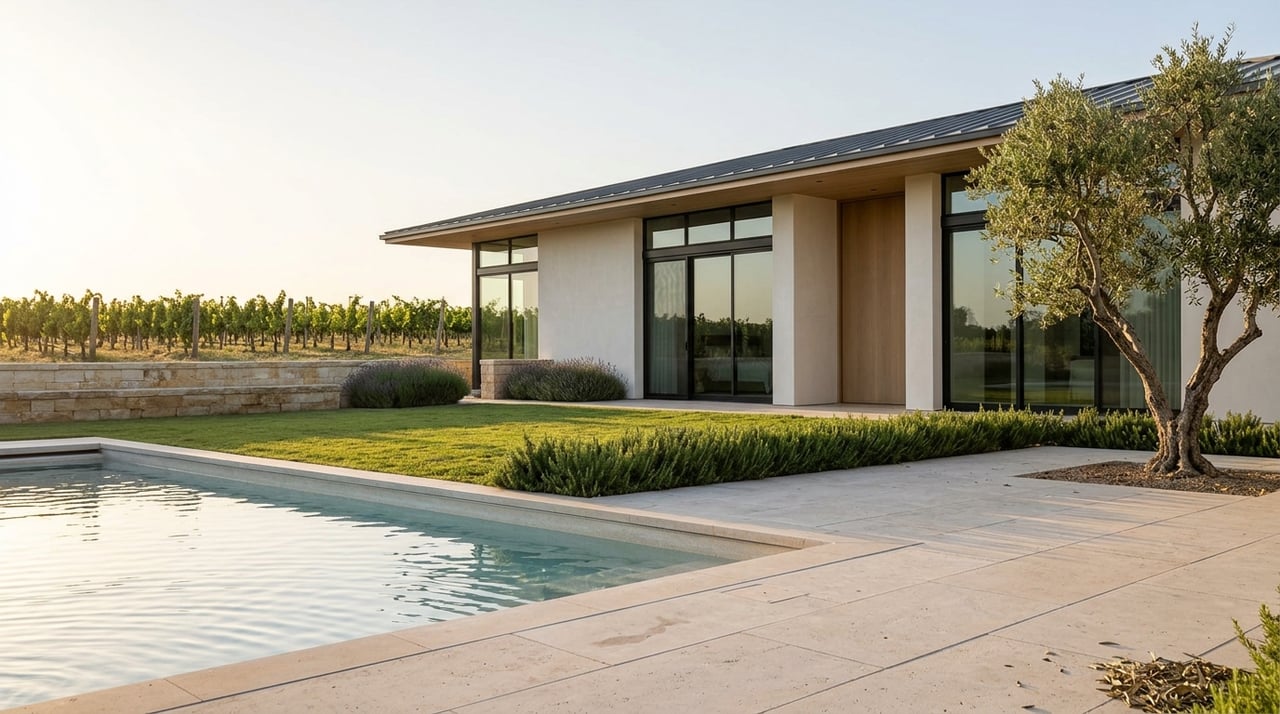
Kenwood's headline number in July 2026 was a $1.97 million median list price, down about one percent from the same month a year earlier and roughly flat against the prior spring. That figure is what a Bay Area buyer sees on any portal before they call. It is also the least useful number in the transaction.
The more informative numbers sit underneath: a median 91 days on market for general inventory, 74 days for the luxury tier, a private-well regime that was rewritten in 2023 and litigated into 2025, and a wildfire insurance market that can add five figures to annual carrying cost before a single vine is planted. Kenwood is not priced like the city of Sonoma because it is not owned like the city of Sonoma. The median hides that. This post is about what the median hides.
The median is a headline, not a number you will ever pay
Kenwood and the city of Sonoma both sit inside the Sonoma Valley Fire District's service area, both fall inside the same MLS, and both attract the same Bay Area buyer pool. On a price-per-square-foot basis they diverge sharply, and on marketing time they diverge more.
| Metric | Kenwood (95452) | City of Sonoma |
|---|---|---|
| Median list / sale price | $1.97M list, July 2026 | $1.2M sale, 3 mo. ending May 2026 |
| Median $/sq ft | $852 list, July 2026 | $851 sale, May 2026 |
| Median days on market | 91 (general), 74 (luxury) | 34 |
| Governance | Unincorporated Sonoma County | Incorporated city |
| Water | Predominantly private wells | Predominantly municipal |
The two towns arrive at similar per-foot pricing through entirely different mechanisms. Sonoma clears in about a month with municipal water and city services baked in. Kenwood takes closer to three months and, in most cases, the buyer is acquiring a private groundwater right along with the house. Everything downstream of that difference is what the median cannot show you.
The well is the transaction
Sonoma County has roughly 40,000 water wells and approximately 23,000 parcels that rely on groundwater as their primary supply, and Kenwood sits inside the Sonoma Valley groundwater basin, one of the three basins the county singles out as most exposed to depletion. The county's Well Ordinance, Chapter 25B of the Sonoma County Code, was amended by the Board of Supervisors on April 18, 2023 to incorporate a Public Trust Analysis, and the amendments took effect May 18, 2023. Inside the Public Trust Review Area, new wells that would push a parcel's total groundwater use above two acre-feet per year can only be permitted with a written county finding that the well will not adversely impact public trust resources such as Sonoma Creek.
That ordinance has not been static. In 2024 a Sonoma County Superior Court judge struck down the county's rules for failing state environmental law, throwing well permitting into limbo across the roughly 300 square miles inside the review area. By March 2025 the court had granted a temporary window during which the county could keep issuing permits, and Permit Sonoma has since restructured the well permitting process, tying it to the same intake path as other construction permits and requiring water conservation forms and, on new wells above the two-acre-foot threshold, metering and monitoring. Dry-weather well testing is now required for new or replacement dwellings in Class 4 groundwater areas and for accessory dwelling units in Class 3 or 4 areas.
None of this appears in the listing photos. It appears in escrow. A Kenwood estate that plans a guest house, a small vineyard block, a pool with an evaporative deck, and a landscape irrigated to Wine Country standards is often within striking distance of the two-acre-foot ceiling before the buyer has considered a single spec. The registered groundwater use, the well log, the pump test, and the dry-weather test are documents to have in hand before the appraisal, not after.
A separate line item worth naming: the Sonoma Valley Groundwater Sustainability Agency assessed a rate of $143.02 per acre-foot for 2025–2026, equalized by a county contribution to match the Santa Rosa Plain rate of $44.70 per acre-foot. For a single rural residence assumed to pump half an acre-foot per year, the fee is $22.35 annually and appears on the property tax bill. Small in isolation. Meaningful as a signal that groundwater is now a metered, priced, and increasingly regulated input to the deal.
Insurance is priced before the offer, not after
Kenwood sits in the Wildland Urban Interface along both flanks of Highway 12, bounded by Sugarloaf Ridge State Park to the northeast and Trione–Annadel State Park to the southwest. Fire Safe Sonoma's Firewise inventory includes multiple nearby communities that have burned in recent years, including the Mayacamas community east of Glen Ellen, which was inside the 55,000-acre footprint of the 2017 Nuns Fire, and the London Ranch Road community, which experienced the Tubbs, Nuns Canyon, and Glass fires in 2017, 2018, and 2019.
That history sets the insurance math. California FAIR Plan premiums for high-wildfire-zone single-family dwellings commonly run $5,000 to $12,000 per year in 2026, and the most exposed ZIP codes in Napa Valley, Malibu, Topanga, and the Sonoma foothills average $9,000 to $25,000, with some individual policies clearing $30,000. Sonoma County foothills specifically are cited at $7,000 to $18,000 typical. A FAIR Plan policy is almost always paired with a Difference in Conditions wrap to approximate the coverage of an admitted homeowners policy, and the combined premium typically runs 1.5x to 2.5x the equivalent admitted policy where an admitted carrier is still writing. A buyer at $2 million of dwelling value should model the wrap alongside the mortgage payment, not after closing.
Fire service quietly reorganized in 2025
Effective July 1, 2025, the Kenwood Fire Protection District merged into the Sonoma Valley Fire District, completing a multi-phase consolidation that began in 2020 with the unification of Valley of the Moon, Glen Ellen, and the Mayacamas Volunteer Fire Company service area. The single district now covers Agua Caliente, Boyes Hot Springs, the City of Sonoma, Diamond-A, El Verano, Fetters Hot Springs, Glen Ellen, Kenwood, Mayacamas, Temelec, and Seven Flags.
For a buyer, the consolidation is not academic. ISO Public Protection Classification ratings, which underwriters use to price structure premiums, are tied to the fire district and its resources. SVFD has publicly noted a reevaluation of its ISO rating pending the mergers. Any Kenwood premium quoted before the new PPC is filed is provisional, and a renewal in the next 12 to 24 months may reprice on the updated classification rather than the legacy one. Ask the broker to confirm which class the quote was rated at.
The 74-day median is not slack. It is the mechanism.
Kenwood's luxury tier averaged 74 days on market in mid-July 2026 and its general inventory sat at 91. The city of Sonoma cleared in 34. The gap is not a sign of weak demand. It is the time the market needs to underwrite the well, the insurance, and the parcel.
Sonoma County home prices at the county level were down less than one percent year over year in early 2026, and the Sonoma Valley submarket in March 2026 carried 180 active listings averaging 57 days on market. Inside that, Kenwood's higher-priced, more encumbered inventory sits longer by design. Sellers who have owned the parcel long enough to hold the price through diligence are typically willing to wait. Buyers who understand the water and fire arithmetic can use that patience to price the risk into the offer rather than absorbing it after closing.
A diligence sequence that respects the friction
- Pull the well log and any pump test results before the second showing, and confirm whether the parcel sits inside the Public Trust Review Area on the county's Well Ordinance Online Map.
- Confirm current registered groundwater use with the Sonoma Valley GSA's GUIDE parcel lookup, and model any planned additions against the two-acre-foot threshold.
- Request FAIR Plan and admitted-market quotes at the actual dwelling value, with the DIC wrap priced alongside, before removing the loan contingency.
- Confirm the fire district and PPC class the insurance quote used, and ask when the SVFD post-merger ISO reevaluation is expected to file.
- Order the dry-weather well test if the parcel is in a Class 3 or Class 4 groundwater area and any ADU, guest house, or replacement dwelling is in the buyer's plan.
- Read the seller's Natural Hazard Disclosure against the Cal Fire Fire Hazard Severity Zone map and the Firewise community boundaries around Bennett Ridge, Mayacamas, and London Ranch Road for context on comparable claims history.
Questions worth asking before the second showing
Does the two-acre-foot ceiling apply to every Kenwood parcel? No. It applies to new wells or expanded groundwater use inside the Public Trust Review Area. Existing legal use is not retroactively capped, but future plans that push total use above two acre-feet per year trigger discretionary review.
Is FAIR Plan the only option in Kenwood? Admitted carriers still write in parts of the Sonoma Valley, and the modernlivingsonoma.com analysis notes that fire-risk exposure varies parcel by parcel more than the ZIP-level maps suggest. Getting an admitted quote in hand, even if it declines, is a useful diligence step.
Will the SVFD merger lower my premium? Unknown. The district is reevaluating its ISO rating and has not published the new PPC. A lower class typically helps; a higher class does not.
Why does Kenwood sit longer on market than Sonoma if demand is similar? Because the diligence is longer. The median reflects the time the market needs to price a private well, a wildfire zone, and a rural parcel, not weakness in the buyer pool.
Kenwood rewards patient underwriting. If you are considering an estate along Highway 12 and want the water, fire, and parcel work done before you write the offer, Caroline Sebastiani and her team can walk the diligence with you. Get a Free Home Valuation to start the conversation.