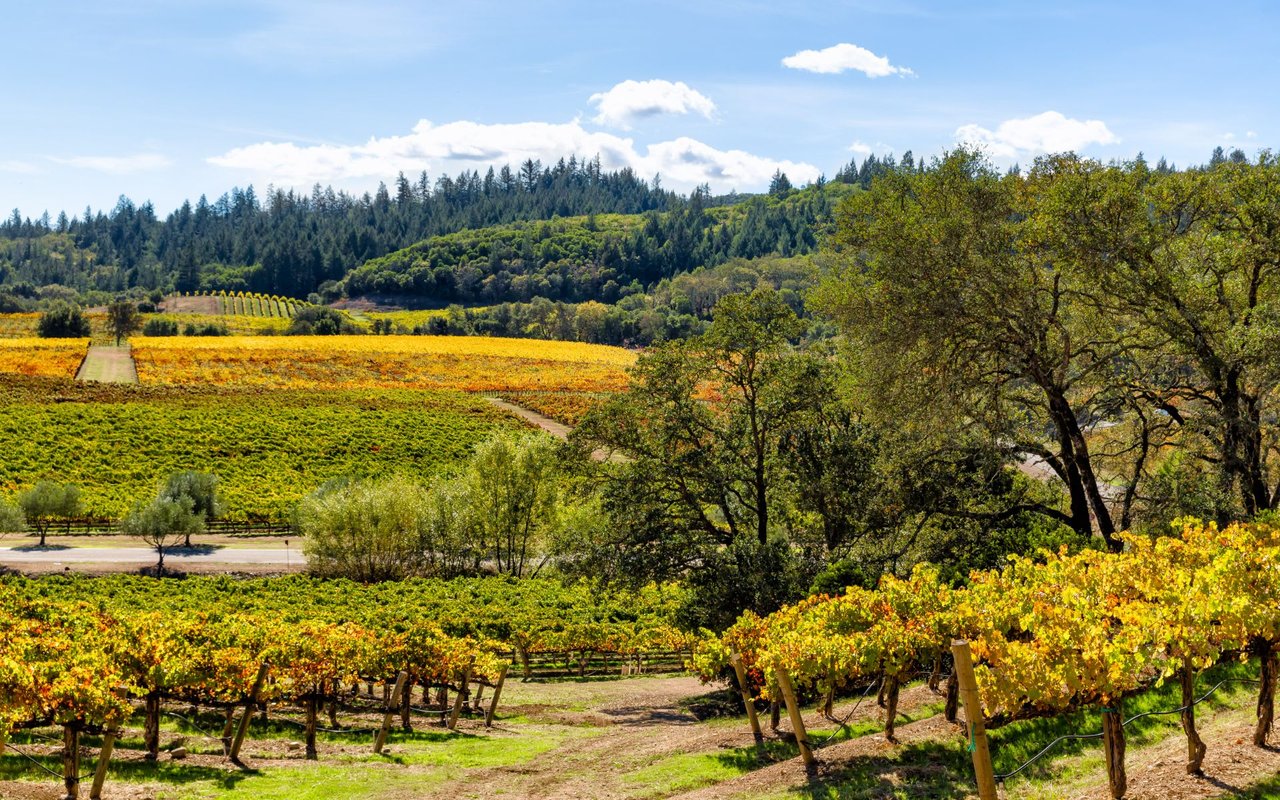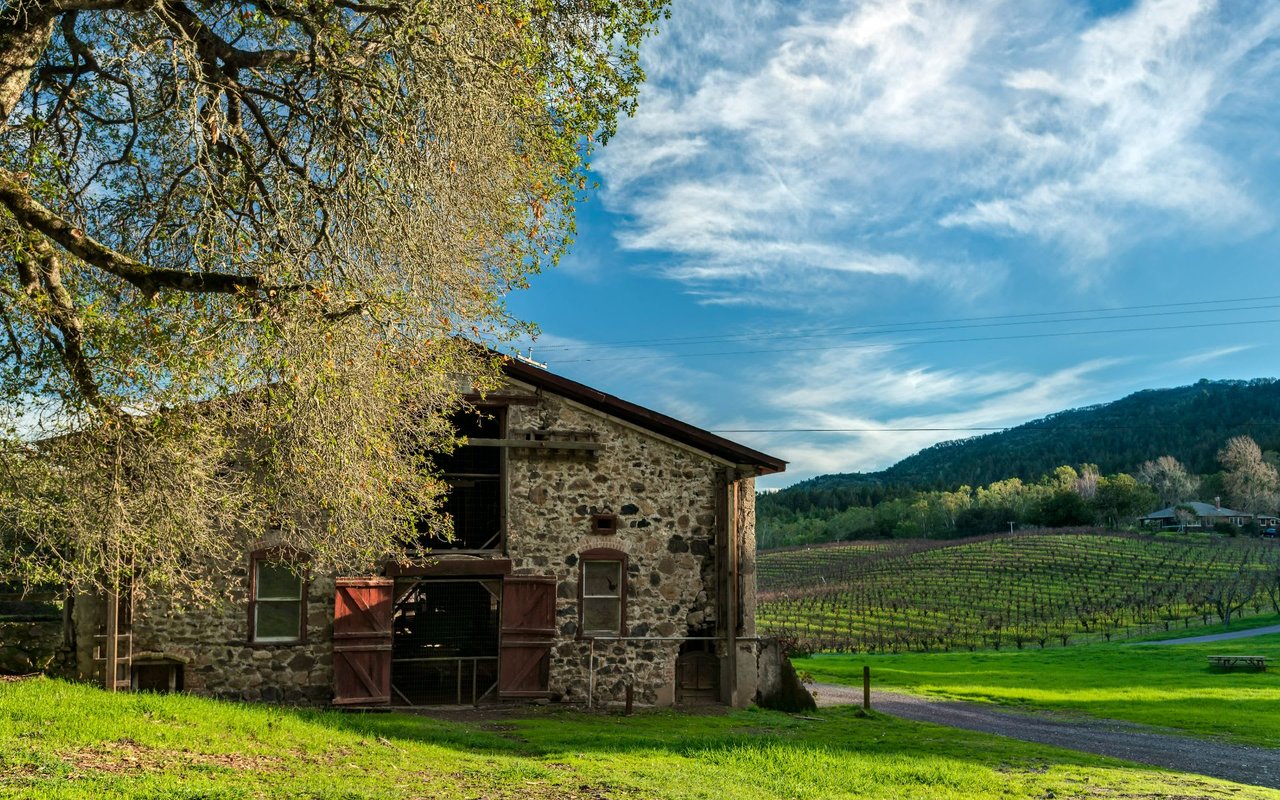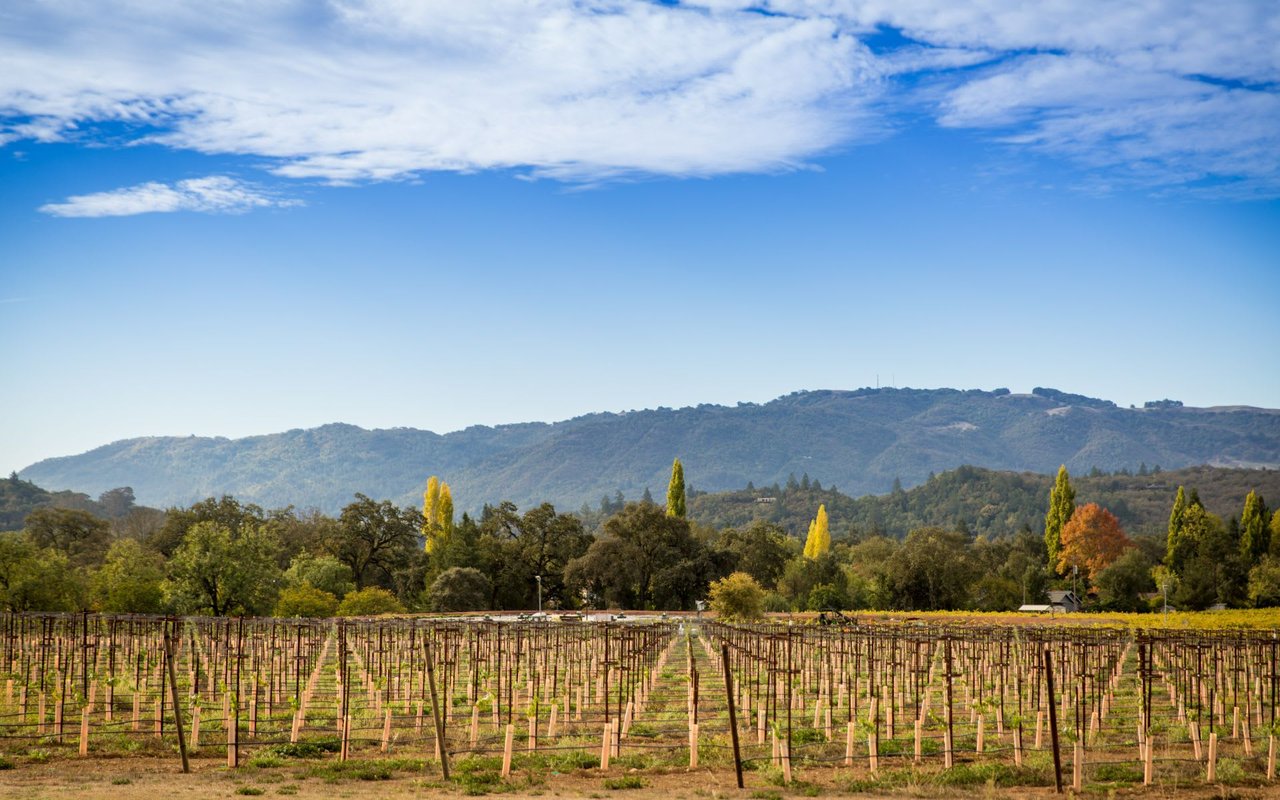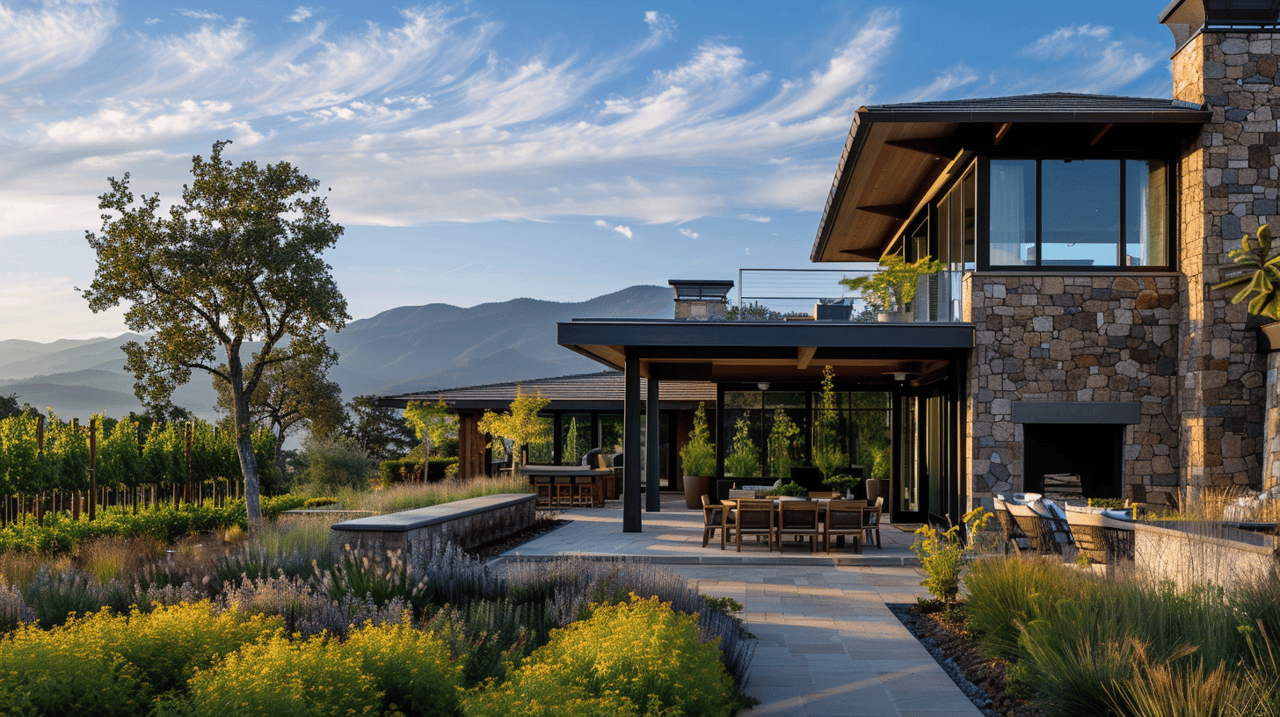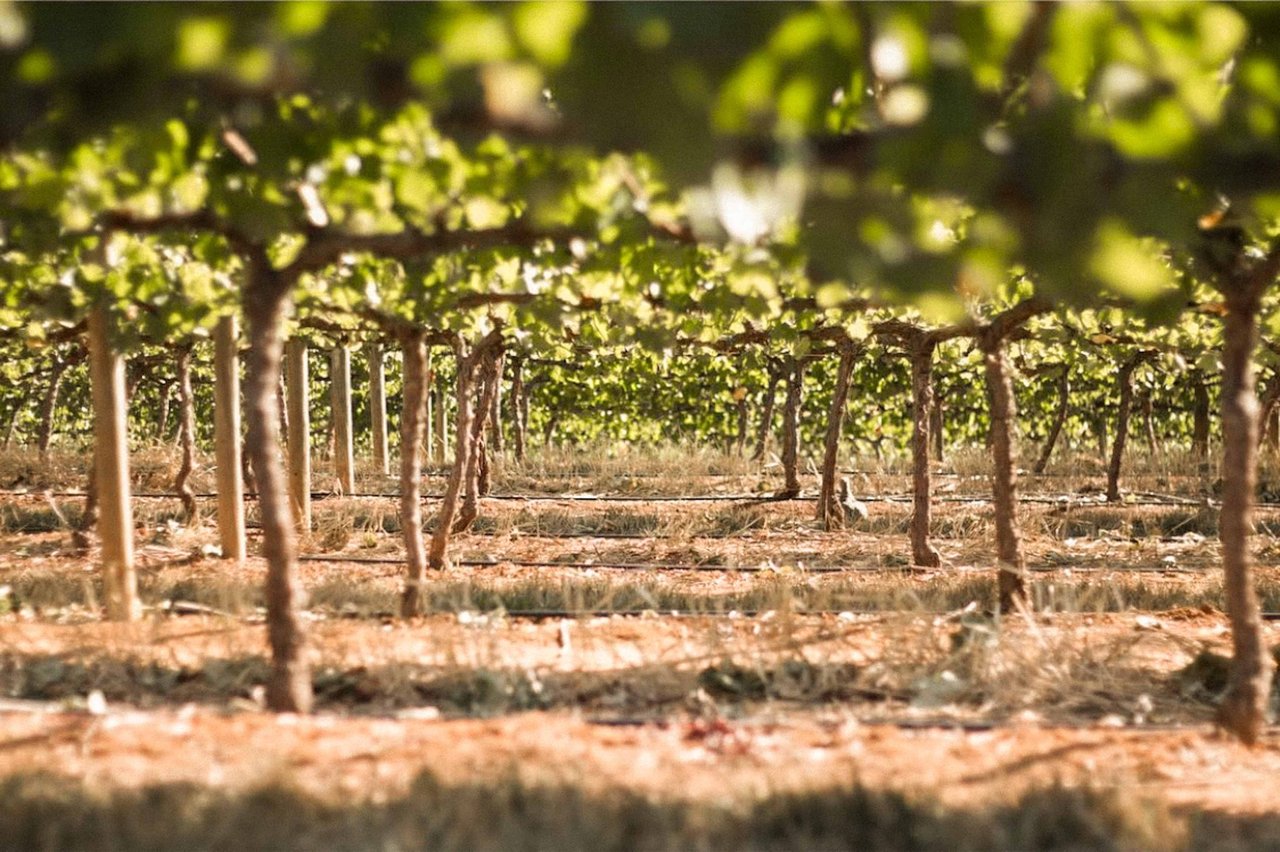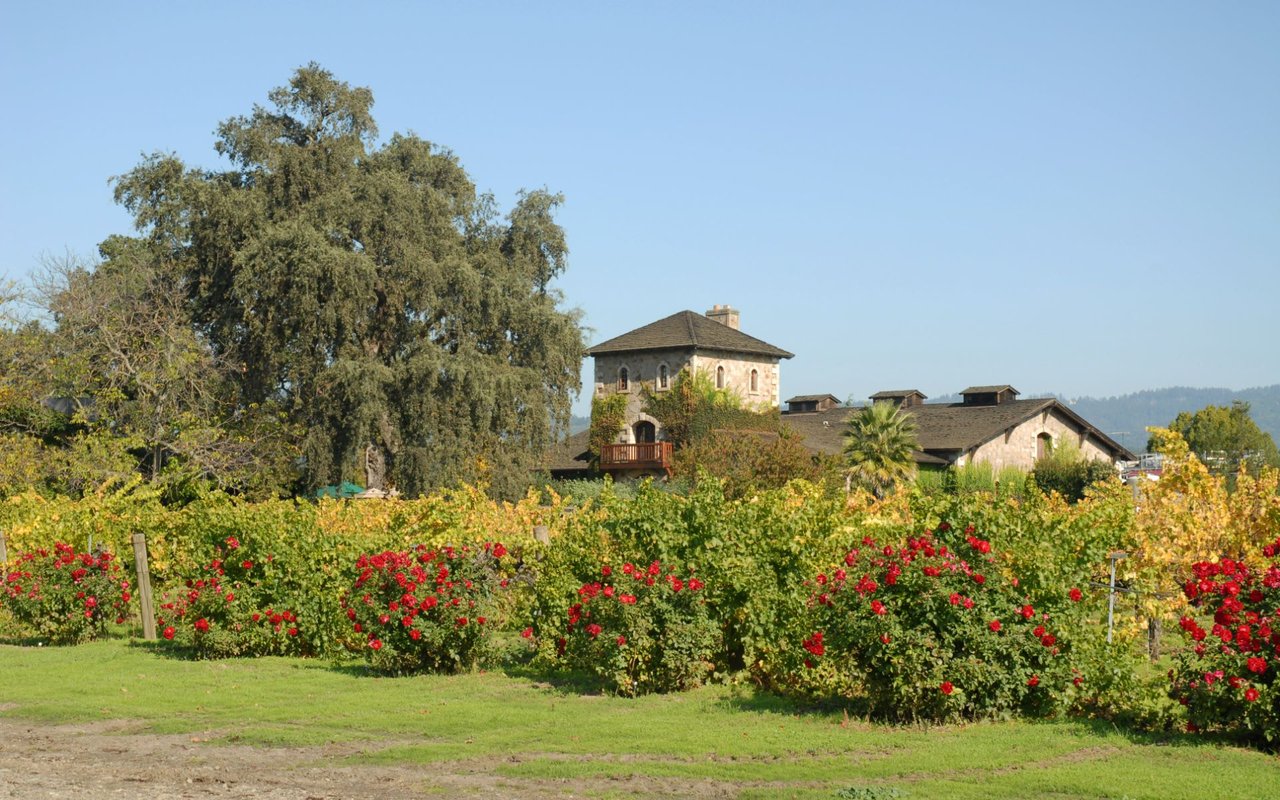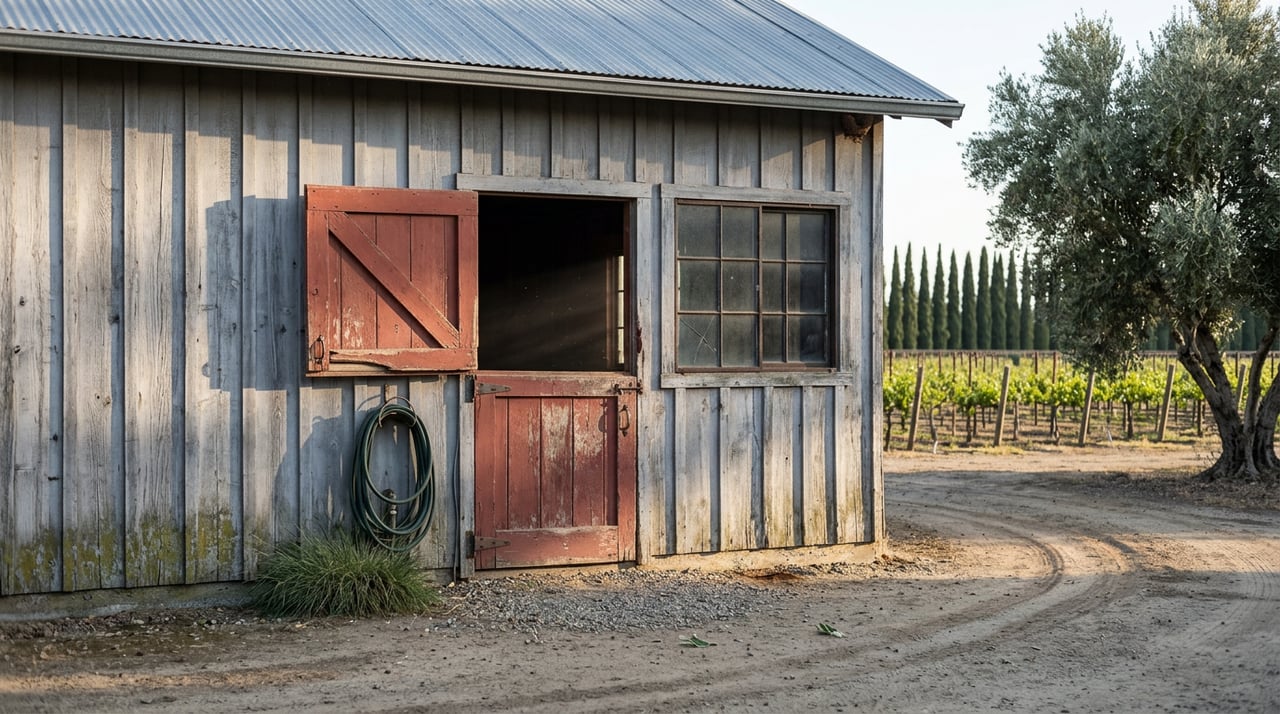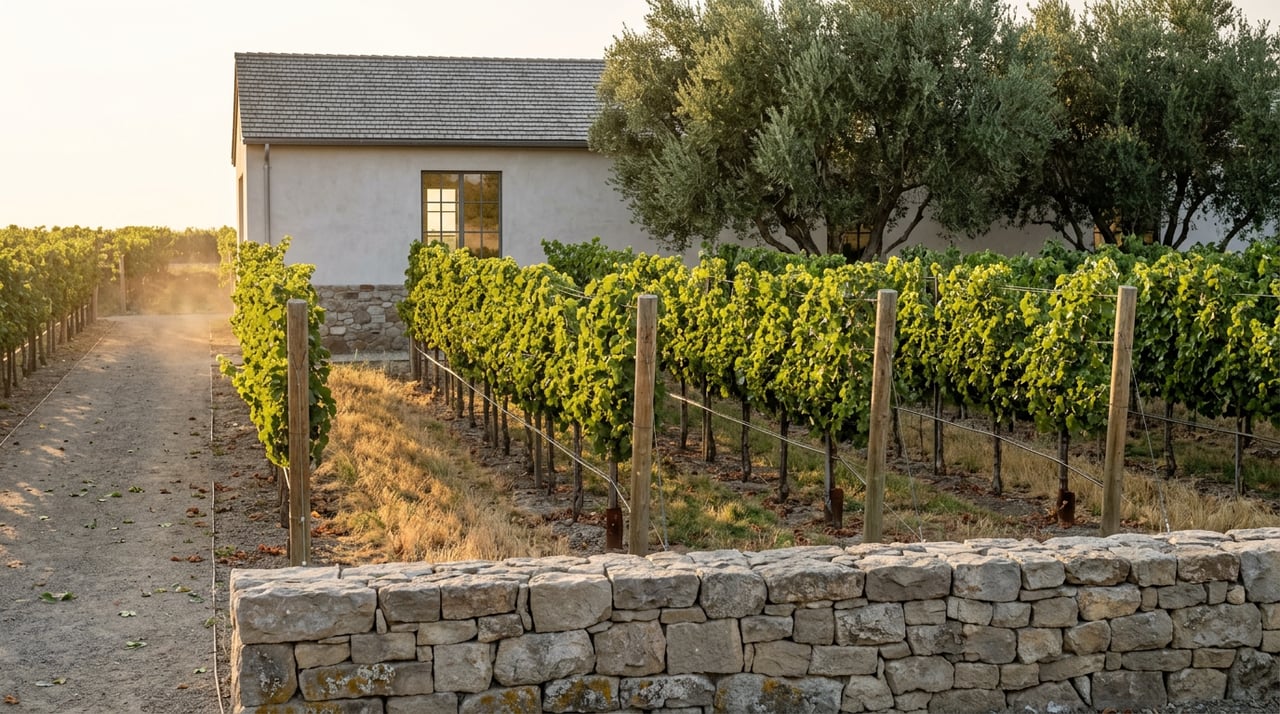
Walk a producing vineyard estate in Napa this month and you'll see the same thing every buyer sees during crush: crews moving through the rows before the heat sets in, a destemmer running behind the crush pad, the sweet, slightly sour smell of fermentation drifting across the driveway. It looks like the postcard. It is not the whole picture.
What that harvest is actually showing you, if you know how to read it, is data. This year's Napa grape harvest report has growers across Atlas Peak and Chiles Valley describing yields as much as 50 percent below normal, driven by a condition called shatter, where a vine's flowers fail to fully develop into grapes. Smith-Madrone's Stu Smith flagged it early in the season. Antinori's Marla Carroll reported the same thing on Atlas Peak, where yields are down at least half. That's not a footnote for wine collectors. It's a live example of why the acreage number on a listing sheet and the actual economic output of a vineyard can be two very different things in the same year.
That gap between what a property says it is and what it's actually producing, legally and agriculturally, is the thing worth understanding before you write an offer on a working Napa vineyard this season.
The Number on the Listing Isn't the Number That Matters
Napa County's own approach to valuing vineyards makes this explicit. When a parcel changes hands, the county appraiser will use an income approach, capitalizing the actual revenue a vineyard generates from grape sales or wine production, whenever there's adequate data on production, expenses, and prices received. When that data isn't available, the appraiser instead allocates a portion of the purchase price to the vines themselves, unless the vineyard is old or diseased, in which case even that allocation shrinks.
In practice, this means a single harvest, especially a down one like 2026's shatter-affected vintage, is a poor stand-in for what a vineyard is worth long-term. A buyer who tours an estate in September and sees a light crop coming off the vines needs the multi-vintage production history, not just this year's picking day, to understand whether they're looking at a bad year on a healthy asset or a structural yield problem. Sellers with strong five-year averages have a real argument to make. Buyers relying on this year's harvest alone are negotiating with incomplete information, in either direction.
What Actually Transfers at Closing
The second thing a listing's acreage number doesn't tell you is what's contractually attached to that land. Producing vineyards routinely carry grape purchase agreements, custom crush agreements, and vineyard leases, and a meaningful share of those contracts require the other party's consent before they can be assigned to a new owner. Some go further and include a right of first refusal, meaning the sale can't close at all without that party signing off.
This isn't a hypothetical. A winery that has bought a grower's fruit for a decade may not consent to a competing winery buying that same vineyard, and a right of first refusal held by a neighboring producer can stall or reroute a deal entirely. The practical effect is that a seller's existing contracts can shrink the pool of buyers who can actually close, regardless of what the property is worth on paper.
| Contract type | Typical consent requirement | Buyer impact |
|---|---|---|
| Grape purchase agreement | Often requires the buying winery's consent to assign | Can narrow the buyer pool if the incoming owner competes with the contracted winery |
| Custom crush agreement | Frequently requires the processing facility's consent | Affects how quickly a new owner can switch production partners |
| Vineyard lease | Usually requires both landlord and tenant to agree to a transfer | Buyer may inherit a farming tenant on fixed terms rather than immediate control of the land |
| Water sharing agreement | Often runs with the land regardless of new ownership | Buyer inherits both the access and the obligations tied to neighboring parcels |
There's also a category of post-closing rights that sellers sometimes want to keep: the right to keep buying grapes from the property, a lease on a residence or vineyard block, continued water access. None of that survives automatically. It has to be negotiated and disclosed before the offer is signed, not discovered afterward, because a buyer who finds out about an undisclosed post-closing obligation after they already have exclusive rights to the property is in a strong position to ask for a price reduction.
The $230,000-an-Acre Lesson From the Acacia Estate Sale
The clearest recent illustration of how contracts and productive acreage, not gross acreage, actually drive price is the 2025 sale of the former Acacia estate, more recently operating as Calmére. The property carries 75 acres of vines and a winery permitted to produce 250,000 gallons a year, along with visitation rights that were grandfathered in decades ago, a detail that adds real value on its own since new visitation permits in Napa's Agricultural Preserve are difficult to obtain today.
The estate had been listed at $17.5 million. It closed at roughly $16.8 million, about 4 percent under the asking price, which works out to close to $230,000 per planted acre. That discount, on a property with grandfathered visitation rights and existing production infrastructure, is a reminder that even well-positioned Napa vineyard assets are being priced on their productive capacity and their entitlements, not simply on a per-acre multiplier applied to total land.
The Housing Rule That Outlives the Farming
There's a third layer that rarely comes up until a buyer starts talking about scaling back the farming operation on a property, and it involves the housing that supports it. Napa County's zoning code, under section 18.104.300, ties any on-site farmworker housing directly to continued qualifying agricultural employment. If that agricultural use is eliminated, the housing becomes subject to removal. The code carves out a narrow exception, allowing agricultural use to pause for up to 24 months for reasons like crop rotation, replanting, or disease, but that's a temporary bridge, not a permanent allowance.
Owners of properties with farmworker housing also have to certify annually, in writing, the names and duration of tenancy for every qualified occupant. And if a housing unit does stop being used for farmworkers, the county requires 60 days' notice to any public housing authority operating within 15 miles before that unit can be converted to another use.
This matters most for the buyer who falls in love with a vineyard estate's architecture and setting but has no real interest in continuing to farm it at scale. If there's farmworker housing on the parcel, that housing's legal status is directly tied to whether the agricultural operation continues, not to who owns the property. It's worth understanding whether that housing was permitted as farmworker housing in the first place, and what happens to it under the code once the vines stop needing full-time labor.
Before You Write an Offer
For anyone seriously evaluating a working Napa vineyard estate this harvest, the diligence list looks different from a typical residential purchase:
- Request multi-year production and yield history, not just the current vintage, especially in a year when shatter has depressed crops across parts of the valley.
- Get a full list of grape purchase agreements, custom crush agreements, and vineyard leases attached to the property, and confirm in writing whether each requires third-party consent to assign.
- Ask directly whether any party holds a right of first refusal on the property.
- If there's on-site farmworker housing, ask how it's permitted and what the seller's current agricultural employment certification looks like.
- Schedule your walkthrough midweek if possible. Weekend traffic on Highway 29 during harvest can add real time to what should be a short drive between towns, and a quieter visit gives you a clearer look at the actual working operation rather than a crowded tasting-room version of it.
A Short FAQ
Does a below-average harvest lower the price of a vineyard estate? Not on its own. Napa County's appraisal approach relies on production and expense history over time, so a single light year, like the shatter-affected 2026 vintage in parts of Atlas Peak and Chiles Valley, is weighed against longer-term averages rather than treated as the defining number.
Do grape contracts automatically transfer to a new owner? Not always. Many grape purchase agreements, custom crush agreements, and vineyard leases require the other party's consent to assign, and some include a right of first refusal that can affect whether a sale closes at all.
Can farmworker housing on a Napa vineyard be converted to something else after purchase? Only under specific conditions. County code ties that housing to continued qualifying agricultural employment, and converting it to another use requires advance notice to nearby public housing authorities and generally depends on whether the agricultural use it supports is still active.
Buying or selling a working vineyard estate in Napa involves more moving parts than a typical luxury home purchase, and most of them aren't visible on a walkthrough. If you're weighing a property like this, Caroline Sebastiani works through the production history, the contracts, and the land use questions alongside the architecture and setting, so the decision is based on what the property actually is, not just what it looks like during crush.